
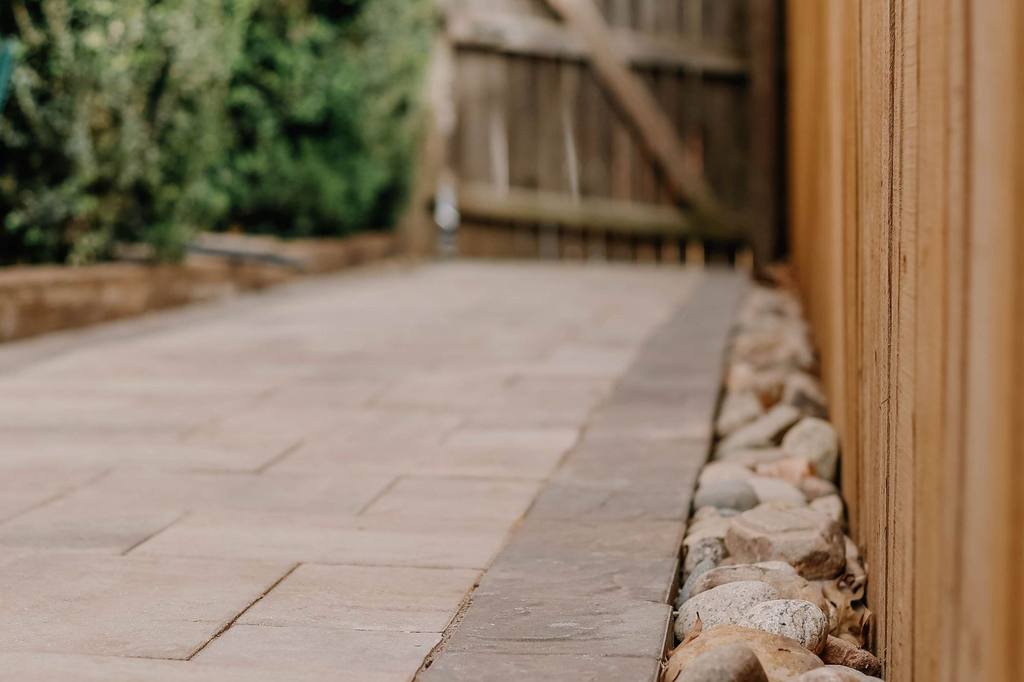
Photo by Daniel Agundiz on Pexels.
Every autumn, London's gardens test their fences against the first serious gales. The Met Office's UK Storm Centre shows that the 2026-27 season's first two named storms, Austen and Boelo, were named on 20 and 22 October 2026. Whether or not your street saw the worst of them, a leaning panel or a snapped post after high winds raises the same three questions: who pays, what should it cost, and who should do it. Sources were checked on 28 October 2026.
First, make it safe - and record everything
- Keep children and pets away from leaning panels and loose posts; a full-height panel catching the wind is heavy and unpredictable.
- Photograph the damage from both sides if you can, including wider shots showing the fence line, any fallen trees or branches and the condition of the posts at ground level.
- Note the date and time you discovered the damage, and keep any weather warnings or local reports.
- If the fence has fallen into a neighbour's garden or onto a public path, tell your neighbour or the council promptly and make a temporary arrangement before arguing about cost.
Whose fence is it?
Responsibility follows ownership, and ownership of London garden boundaries is often less clear-cut than people assume. Our earlier guide, who owns the fence?, explains what HM Land Registry records do and do not show, and why a "T" mark is not conclusive. If the fence is your neighbour's, you cannot generally insist that they replace it, but you can agree a sensible shared approach. Our page on fencing rules in London covers height limits and planning points to bear in mind if you are replacing it.
Will your insurer pay?
The "fences and gates" exclusion
This is where many homeowners are disappointed. In a 2022 decision involving Ageas (DRN-3589608), the Financial Ombudsman Service looked at a policy that said, in terms, "We won't cover you for damage to gates and fences", and observed that it is common for home insurance policies to contain such an exclusion. The ombudsman found that the policy had made the exclusion clear.
Other policies take a middle path. In a decision involving QIC (DRN-3753383), storm damage to gates and fences was covered only if the home itself was damaged at the same time by the same cause. On the facts there, with wind speeds recorded as high as 70mph around the time of the damage, the ombudsman decided that the damage to the fence and gate should be reconsidered. Individual decisions turn on their own policy wording and facts, but they show why it pays to read your schedule carefully rather than assume either way.
How the ombudsman approaches storm claims
The Financial Ombudsman's storm damage guidance explains that it usually asks three questions:
- Do we agree that storm conditions occurred on or around the date the damage is said to have happened?
- Is the damage claimed for consistent with damage a storm typically causes?
- Were the storm conditions the main cause of the damage?
It looks at weather records, often using the Beaufort scale, on which Force 8 (gale) is 34-40 knots and Force 10 (storm) is 48-55 knots; one knot is about 1.15mph. If an insurer relies on an exclusion - for example, that the fence failed because of wear and tear or rotten posts - it is for the insurer to show the exclusion applies. That is why your photographs of the posts and the fence's general condition matter.
Making and escalating a claim
- Check the storm section, any "fences, gates and hedges" exclusion and whether you have accidental damage cover, which the ombudsman suggests checking where storm cover does not apply.
- Weigh the claim against your excess and the effect on future premiums; for a single panel, a claim may not make sense.
- Do not dispose of damaged materials until the insurer confirms it does not need to inspect them, unless they are dangerous.
- If you disagree with the insurer's decision, complain to the insurer first. If it has not resolved the complaint within eight weeks, or you are unhappy with its final response, you can refer the complaint to the Financial Ombudsman Service, which is free to use.
What repairs should cost: dated figures
Checkatrade's fence repair cost guide (updated May 2026) gives these typical UK prices, and notes that costs in London and the South East tend to be a little higher:
- replacing a 1.8 m x 1.8 m lap fence panel: about £100-£150;
- replacing a closeboard panel: about £110-£150;
- replacing a timber post: about £50-£70; a concrete post: about £50-£80;
- replacing a concrete gravel board: about £50-£70;
- taking down and clearing away a damaged panel: about £20-£30;
- replacing a garden gate: about £200-£300;
- labour on its own: around £30 an hour, with overall repairs commonly around £60-£180 per metre depending on the work.
These are guide prices rather than quotes, and storms create short-term demand. If several quotes come in well above these ranges, ask what is included; if one comes in far below, ask what is being left out.
Repair, or rethink?
Storm damage is often a symptom. A fence that fails in a gale has usually been weakened at the base, where timber posts sit in wet ground. When you brief a fencer, ask:
- whether the posts are sound, or whether the whole run is nearing the end of its life;
- whether concrete posts and gravel boards would keep timber out of contact with the soil;
- whether a more wind-permeable design - such as hit-and-miss or slatted boards - would suit an exposed position;
- how the fence will be fixed at the ends, and whether any structural element, such as a garden wall, is also involved.
If a masonry garden wall on the boundary has been damaged, take advice before rebuilding it, as the Party Wall etc. Act 1996 can apply to masonry boundary walls even though it does not apply to timber fences.
The door-knockers who arrive after a gale
High winds bring opportunistic traders. Some are perfectly legitimate local firms; others quote low on the doorstep, demand cash up front and disappear. Sensible precautions:
- Do not agree on the doorstep. Get at least two or three written quotes, with materials, post type, disposal and VAT specified.
- Know your cancellation rights. Under the Consumer Contracts Regulations 2013, a contract made at your home rather than at the trader's premises normally has a 14-day cancellation period. If the trader does not give you the required information about the right to cancel, the period can be extended by up to 12 months.
- Check the business. Look up a limited company on Companies House, and verify any trade association or TrustMark membership on the organisation's own website.
- Pay sensibly. A modest deposit for materials on a larger job is normal; full payment before any work starts is not. Paying by card can give additional protection.
- Agree with your neighbour first if the fence is shared or theirs, in writing, including which way the panels and posts will face.
A short checklist
- Make the fence safe and photograph everything, including the posts.
- Establish whose fence it is before commissioning work.
- Read your policy's storm cover, fence exclusions and accidental damage cover.
- Claim if it is worthwhile; complain, then go to the ombudsman after eight weeks if necessary.
- Get written quotes and compare them with published, dated price guides.
- Use the repair as a chance to fix the cause - usually the posts - not just the panels.
Sources (checked 28 October 2026): Met Office, UK Storm Centre; Met Office, Beaufort wind force scale; Financial Ombudsman Service, Storm damage; FOS decision DRN-3589608; FOS decision DRN-3753383; Checkatrade, Fence repair cost (May 2026); Consumer Contracts (Information, Cancellation and Additional Charges) Regulations 2013. Information only; not legal or insurance advice.
Quick answers
Does home insurance cover a fence blown down in a storm?
Often not on its own. The Financial Ombudsman has noted that it is common for home insurance policies to exclude storm damage to gates and fences, and some policies only cover them if the house was damaged at the same time and by the same cause. Read the storm section and the exclusions of your own policy, and check whether any accidental damage cover applies.
How much does it cost to replace a fence panel?
Checkatrade's fence repair guide (updated May 2026) gives about £100-£150 to replace a 1.8 m x 1.8 m lap panel and £110-£150 for a closeboard panel, with posts and gravel boards priced separately. Prices in London and the South East tend to be a little higher than the national figures.
Can I cancel a fence repair I agreed to on the doorstep?
Usually, yes. Under the Consumer Contracts Regulations 2013, a contract agreed away from the trader's business premises - including at your home - normally carries a 14-day cancellation period. If the trader fails to give you the required cancellation information, that period can be extended by up to 12 months.